

Stop scrollers in their tracks and hook them in.
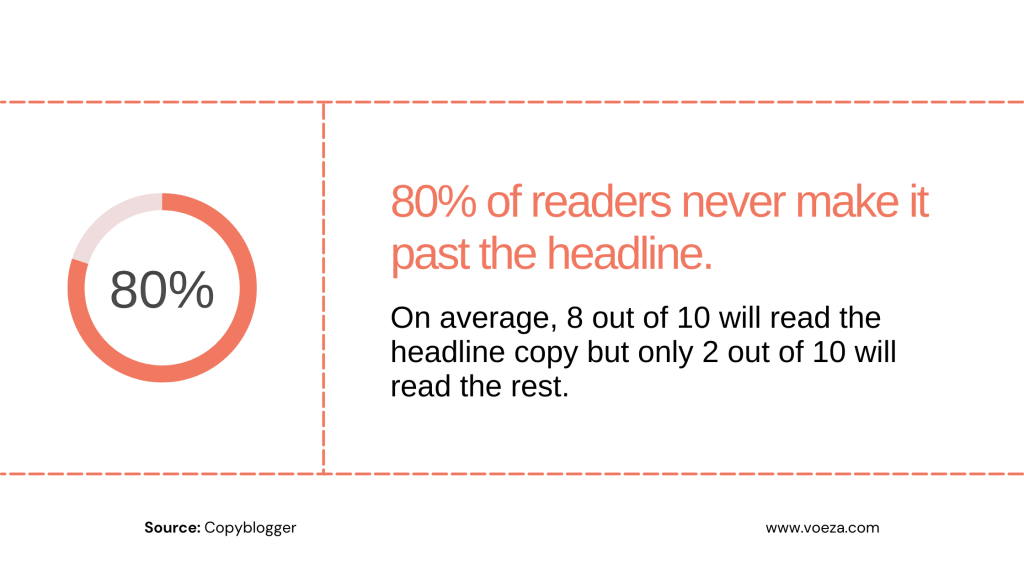
Writing strong headlines is a critical step as it is often the first thing your readers see. It is the determining factor for whether they will proceed to read the rest or keep scrolling past.
Here’s another stat to keep in mind: Traffic can vary by as much as 500% based on the headline alone. As a writer or marketer, it is in your best interest to explore the most effective formula for high-performing articles.
With that being said, here are 13 tips for writing catchier headlines:
- Use numbers: Headlines with numbers often attract more clicks than those without. For instance, “7 Free Apps That Can Make Planning Your Next Vacation Easy” is more likely to catch a reader’s attention than “Free Apps That Can Make Planning Your Next Vacation Easy”.
- Be specific: In your headline, clearly mention what your article is about. A vague headline rarely clues readers in about what they’re going to get from your content. For example, “12 Best Writing Tools for Creating and Optimizing Content” is more specific than “Create and Optimize Your Content”.
- Use strong action verbs: Give your headlines a boost of energy with the use of strong, vivid action words. For example, “Everyday Tools to Help You Lose Weight” is more engaging than “Ways to Lose Weight”.
- Keep it short and sweet: Google will only display the first 70 characters in their SERPs, on average. Any longer than that and they’re cut, which means users won’t be able to see them. Try to keep your headline under the ceiling of 70 characters.
- Use emotional triggers: Use terminologies that evoke emotions in your readers. For example, “COVID’s Devastating Impact on Black-Owned Small Businesses” or “Global fashion brands exploiting Bangladesh workers: Study”.
- Be unique: Your headline should stand out from other headlines on the same topic. Avoid using generic headlines that have been used over and over again. Try to come up with a unique angle that will make your title stand out.
- Test and tweak: Don’t be afraid to experiment with different headlines to find out which ones perform better. You can also use analytics tools to track clicks and engagement rates before you make changes to maximize your results.
- Use power words: These are strong, descriptive words that can make your headlines more compelling. Examples are “ultimate”, “proven”, “secret” and “ground-breaking”.
- Ask a question: Pique your readers’ curiosity and make them want to read further. Examples of headlines with questions are “Is social media turning people into narcissists?” and “Why do we procrastinate, and how can we stop?”
- Use humor: Witty or humorous headlines are far more memorable and clickable. Just make sure it is done tastefully. Here’s an example from The Atlantic: “The Key to a Good Parent-Child Relationship? Low Expectations.”
- Use keywords: Adding relevant keywords in your headline can help increase your blog’s SEO performance and make it more likely to show up in search engine results.
- Use social proof: Use social proof in your title to build credibility and make your post more appealing. For example, “21 Books Highly Recommended by Successful Executives” and “How to start building muscle as a beginner, according to personal trainers”.
- Make it urgent: Creating a sense of urgency in your headline can make readers feel that they need to act quickly to avoid missing out on something valuable. Here’s an example from Fast Company: “4 Ways To Prevent Burnout Before It’s Too Late”.
Conclusion
The most important thing to remember is that your headline is your first opportunity to catch your readers’ attention and reel them in. Set aside a bit of time to craft strong headlines and consider which ones will work best.
While you’re at it, have fun! Writing does not have to be a stressful exercise but it does require practice and consistency to improve. And, by being open to learning, you can turn it into a rewarding and fulfilling experience.
If you are looking for help with your content, reach out today.
 The Official Sara
Leave a comment