

If you have the attention span of a goldfish, this one’s for you.
We often hear people complain about having the attention span of a goldfish. If that is true, why not make it work for you?
This is where “productive procrastination” comes in. Let’s get right into it.
What is Productive Procrastination?
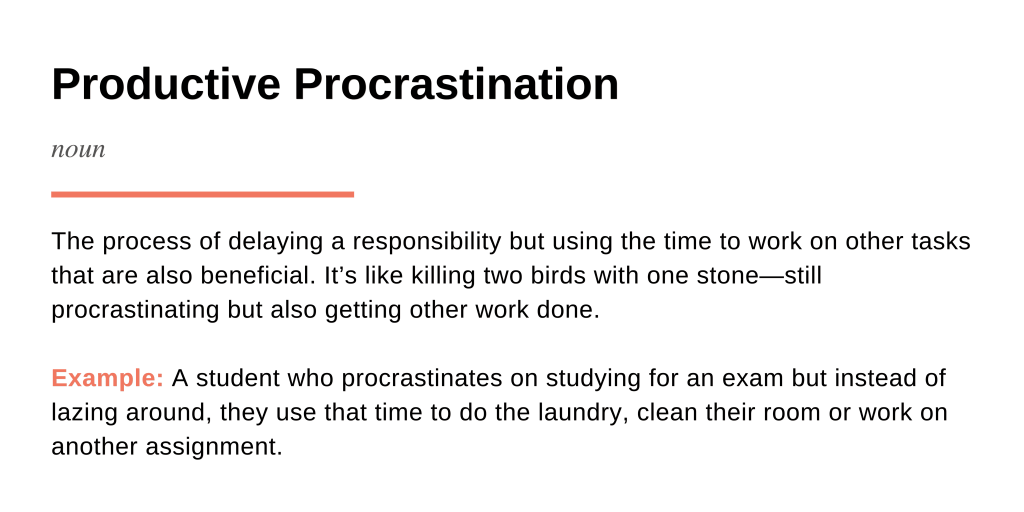
This approach faces a bit of criticism because, at the end of the day, the big task at hand remains untouched.
But if you’re a content creator, whose plan is to produce and publish new materials regularly, productive procrastination can be an effective way to overcome writer’s block or burnout and stay motivated.
How One of the Most Prolific Writers Did It?
Isaac Asimov, a prolific American science fiction writer produced over 500 books and hundreds of short stories in the span of his life. How did he create such a large body of work?
He’s what he said:
“Frequently, when I am at work on a science fiction novel […] I find myself heartily sick of it and unable to write another word. But I don’t let that drive me crazy. I don’t stare at blank sheets of paper. I don’t spend days and nights cudgeling a head that is empty of ideas.
Instead, I simply leave the novel and go on to any of the dozen other projects that are on tap. I write an editorial, or an essay, or a short story, or work on one of my nonfiction books. By the time I’ve grown tired of these things, my mind has been able to do its proper work and fill up again. I return to my novel and find myself able to write easily once more.”
—Isaac Asimov in his memoir
This approach did not let him get stuck on any one project for too long and, that way, he maintained his momentum.
It is worth mentioning that, of course, while there are other prolific writers in our history, their approach and the reason why they are prolific do not follow the idea of “productive procrastination”.
For example:
- Dame Barbara Cartland – A British writer who published 723 novels (even more than Isaac Asimov). She is also the Guinness World Record-holder for most books published in a single year at 191 books. Her formula was to keep her stories simple with a basic outline; she only changed the characters and story for each book. She also had a team of assistants who helped with research, typing and editing, giving her room to focus on the creative aspects of writing.
- Alexandre Dumas – A French author best-known for his books The Three Musketeers and The Count of Monte Cristo. He has written over 300 novels, plays and essays. He was reported to having a team of collaborators who helped research, fact-check and even write.
You may compare these approaches to either outsourcing your work to others to save time and increase output or even hiring a ghostwriter or using artificial intelligence tools like ChatGPT to write parts of your work.
Work & Procrastinate at the Same Time
No approach is one-size-fits-all. Some people find it easy to stay on track and tackle one task at a time, from the start all the way to the finish line. Others may not and that’s perfectly fine.
You may be seeking the approach that works best for you and that approach could be productive procrastination.
As a hustling content creator, perhaps you’re working on shooting a YouTube video or writing an eBook. When you’re no longer in the mood to work on it, hit the snooze button and work on another piece.
Eventually, you’re going to end up with a number of projects that are either finished or nearly done with a bit of tweaks and editing.
Conclusion
There’s no need to wallow up in having a short attention span. Instead, use it to your advantage. Have multiple work-in-progress tasks on your plate.
Work on the ones that excite you the most and, as soon as you’re tired of it, move on to the next thing you’re looking forward to.
 The Official Sara
Leave a comment